Founding — 19 June
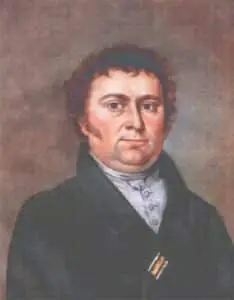
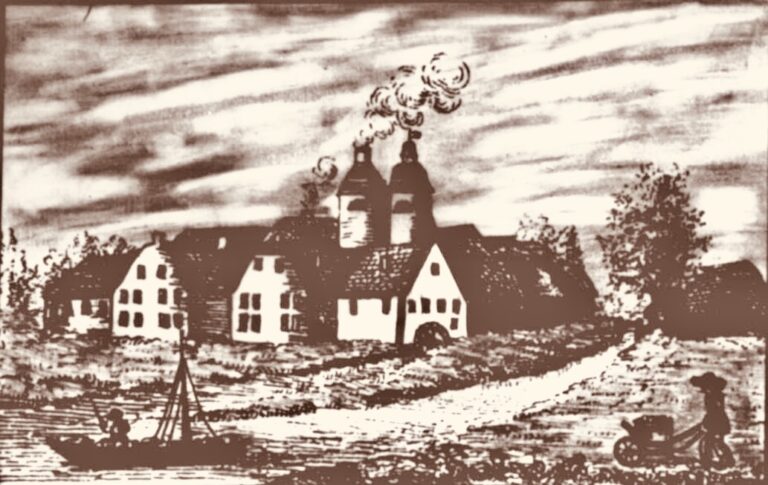
Caspar Diederich Wehrenbold, Johann Wilhelm von Born, Franz Schulz, Friedrich Heinrich Gockel (all of Lünen) and Georg Wilhelm von Born from Essen sign the partnership agreement establishing the mining company „Eisenhütte Westphalia“ — a 128-share partnership under Prussian mining law. Earlier, on 30 March, Wehrenbold had secured the water rights of the Beckinghausen mill from the Prussian Domain Chamber — a few kilometres downstream from the Roman camp from which Drusus and Tiberius once advanced their campaigns along the Lippe. Altlünen has about 400 inhabitants at the time.
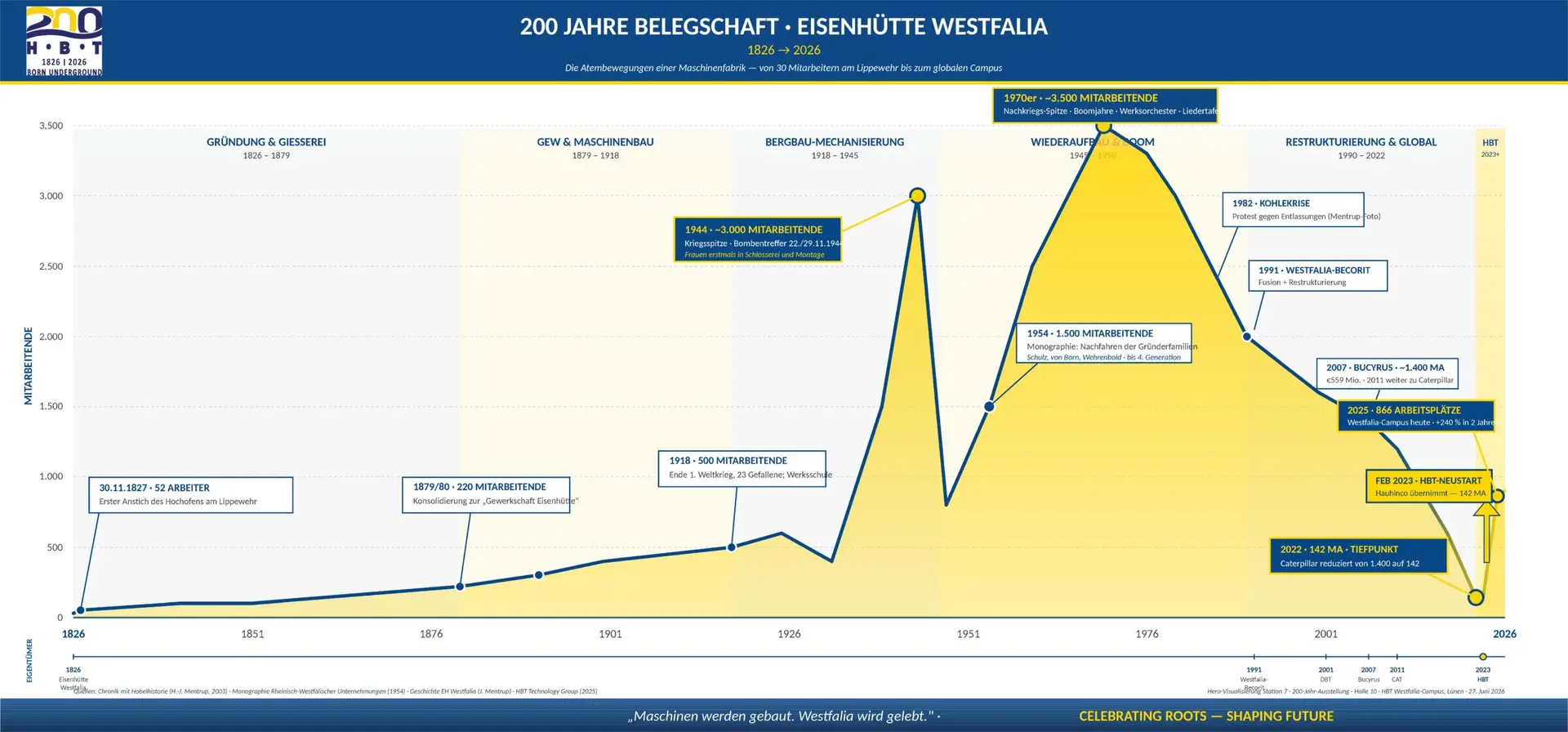
Operations begin — 52 employees
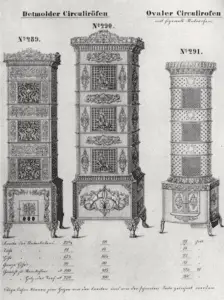
Ironworkers from the Hunsrück and Eifel regions are recruited, marry in the Altlünen parish church and settle in Wethmar. On 30 November, the first batch of cast iron is tapped from the small blast furnace — producing pots, pans, stoves, cast-iron columns and window frames.
First mining delivery
First documented deliveries to mining: cast-iron rails for track systems at various collieries. The beginning of a 170-year partnership with the mining industry. At the same time, iron goods travel via the Lippe and Rhine as far as Hamburg, Kiel, Rostock and Tilsit — and, through Lünen's old Hanseatic connections, into the Baltic.
Widow & Orphan Fund
The works establish a Widow & Orphan Fund to support workers' families — a remarkably early step, long before state social insurance became the norm.
A school for the children
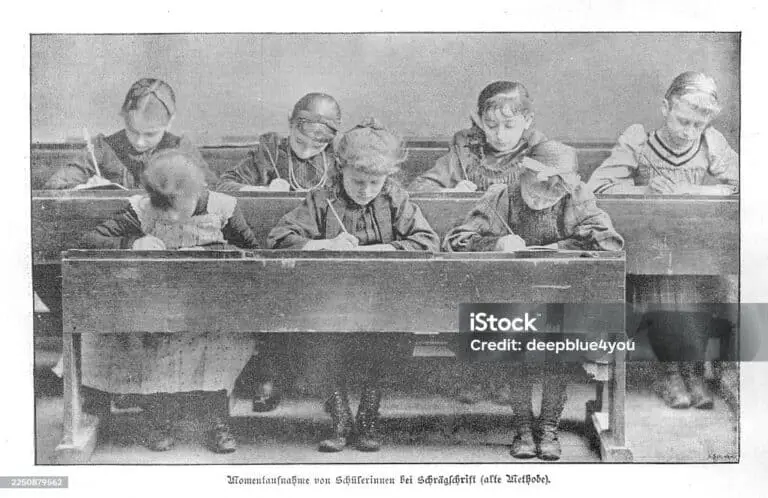
Teacher Friedrich Lucas of Schollbruch establishes the first school in Wethmar on behalf of the company — an inter-denominational school for the children of both Christian confessions. It is taken over by the local municipality in 1899.
Company health insurance fund
The company establishes its own health insurance fund for employees — five years before Bismarck's national workers' health insurance is introduced.
Workforce: 220 employees.
Pension fund
The company sets up a pension fund for its workers.
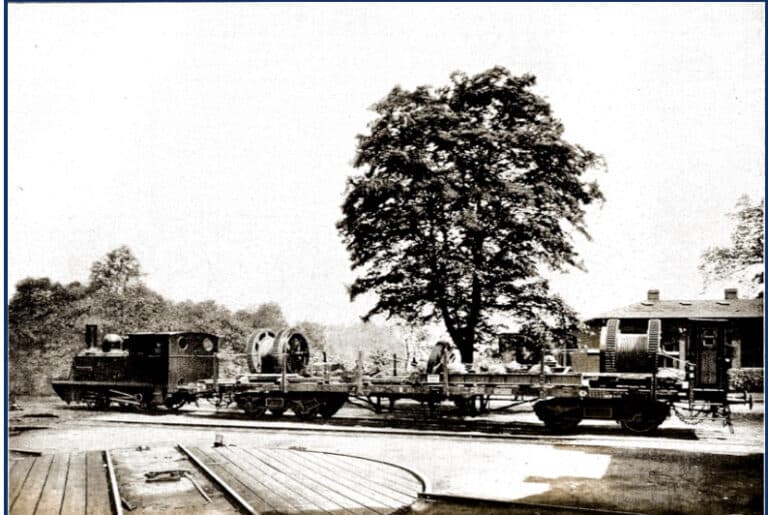
In the same year, a 4 km rail spur is built to Lünen-Nord station — connecting the works to the national rail network.
Strategic pivot to mining
As large electric power plants rise, demand for steam engines falls. At the same time, coal mining in the Ruhr is booming. The company decides to massively scale up its mining-machinery business — a strategic turning point that defines the next century.
Workforce: 300 employees.
Voluntary Sunday school for apprentices
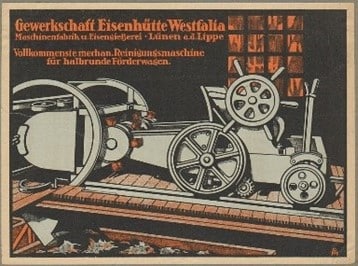
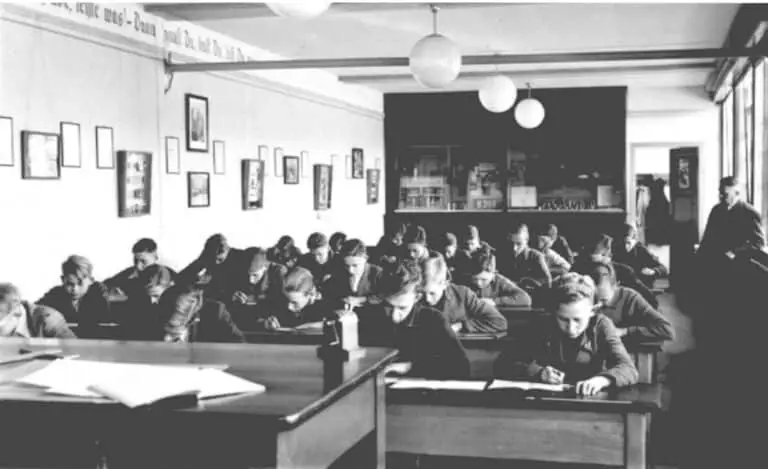
Westfalia sets up a voluntary Sunday class for its apprentices — the start of a long, in-house training tradition. In May 1917, this evolves into the formal Werksfortbildungsschule with two foundry technical classes (junior and senior level), later recognised as district vocational classes drawing apprentices from across the Münsterland.
Gold Medal — Brussels World's Fair
The company's mining machines, exhibited at the Brussels World's Fair, win the Gold Medal. The same year, 104 twin air winches are delivered to mines, and column apparatus for coking plants is exported in significant volumes to England.

Apprentice workshop — the in-house training programme is complete
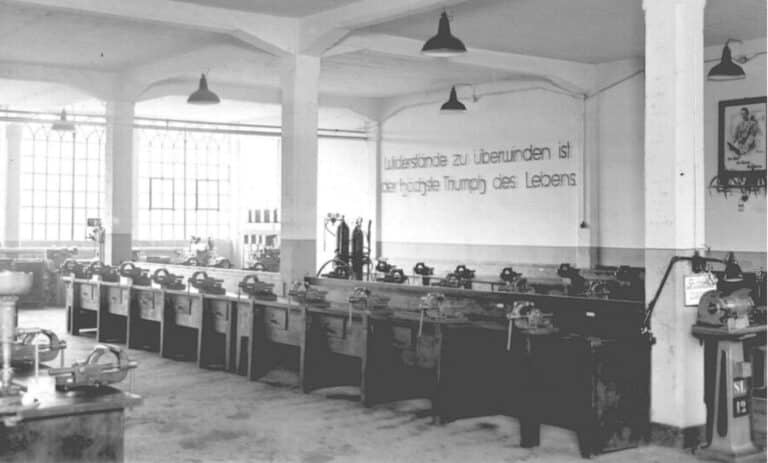
Building on the Sunday school of 1907 and the Werksfortbildungsschule of 1917, an apprentice workshop is now added — the practical counterpart to the school. In-house training is now complete: works school plus workshop under one roof, the benchmark for generations of skilled workers, engineers and managers.
Workforce: 500 employees.
Centenary celebration
100th anniversary in Lünen. Group photo of the entire workforce in front of the administration building. Director Ernst Weiß leads the works. The „Liedertafel Westfalia Wethmar“ choir celebrates its own 50-year jubilee at the same time — a generation has lived, worked and sung here.
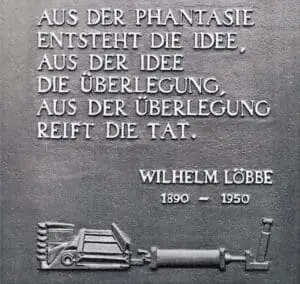
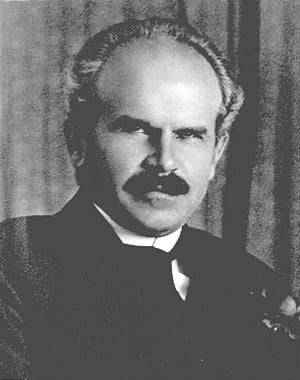
Wilhelm Löbbe patents the coal plough
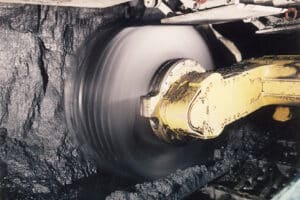
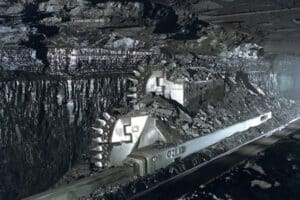
Wilhelm Löbbe — who joined as an apprentice in 1904 and later became chief engineer — files the patent for the coal plough (Kohlenhobel). The invention will revolutionise underground coal mining worldwide.
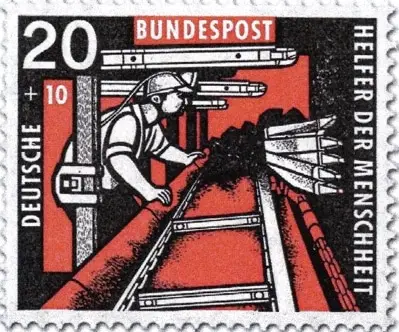 In the 1960s, the German Federal Post Office will issue a special stamp in his honour.
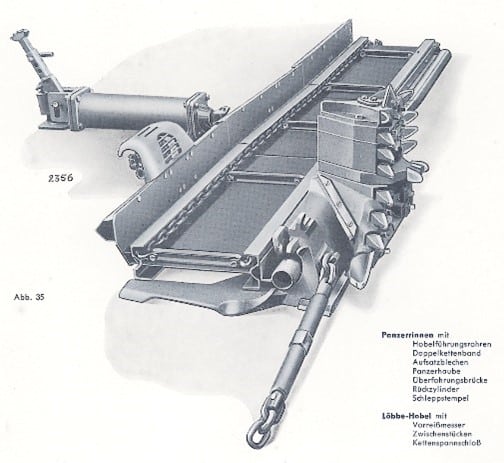
The PANZER® face conveyor
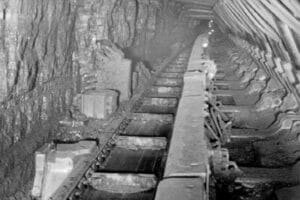
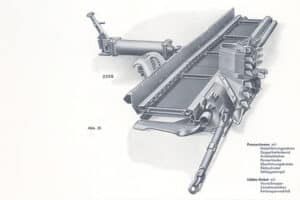
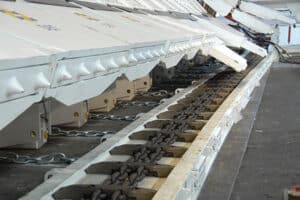
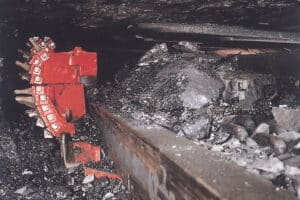
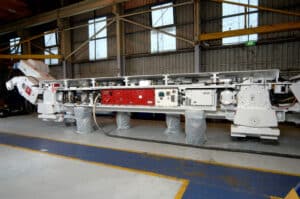
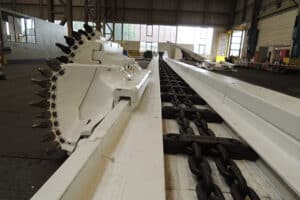
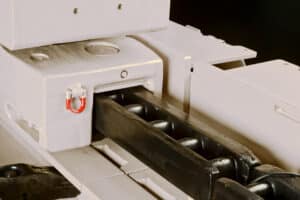
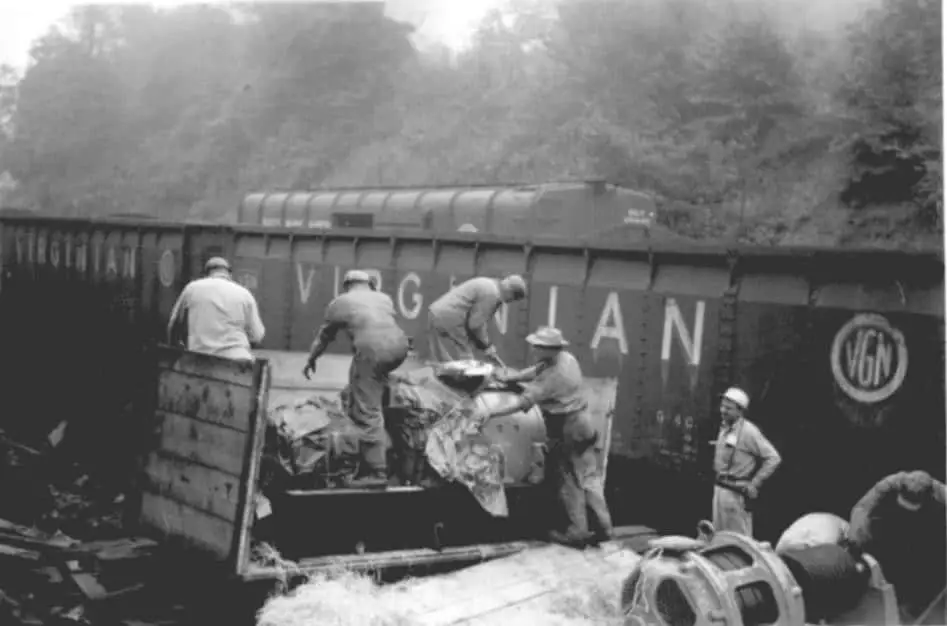
Development of the PANZER® face conveyor as a twin-chain conveyor with externally mounted chains. First deployed at the „Johannisgrube“ mine in Upper Silesia (the „PANZER-Johanna“). It will become an indispensable haulage system in underground coal mining and a hallmark of Westfalia.
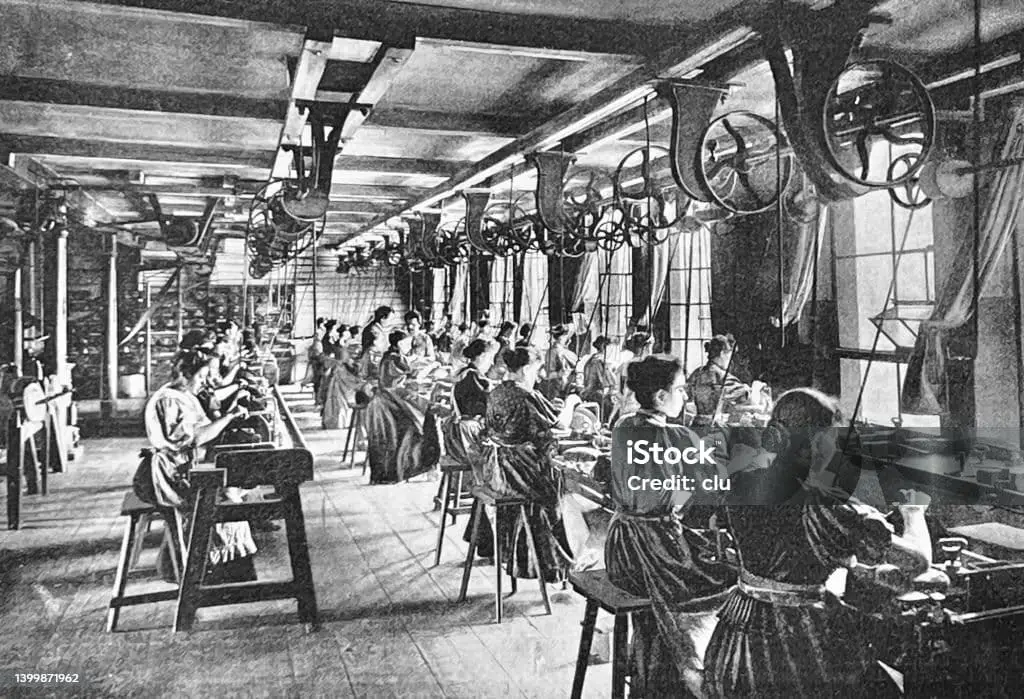
Women join the workforce
The Second World War forces a change in the workforce: for the first time, Westfalia hires women in significant numbers — who, as the contemporary company report records, „achieve astonishingly high productivity“.
A quiet but decisive chapter in the company's story.
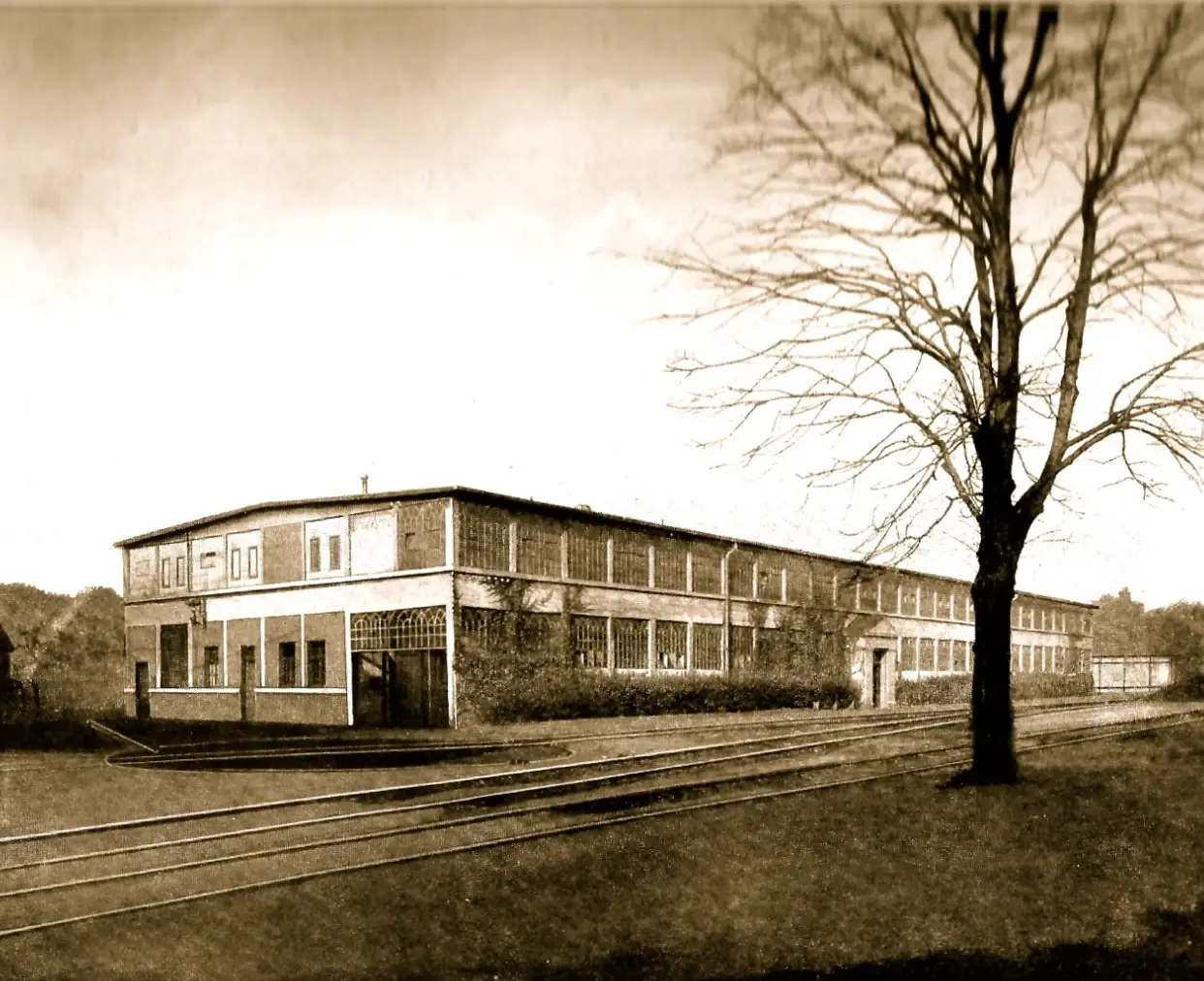
A new production hall — in the middle of the war
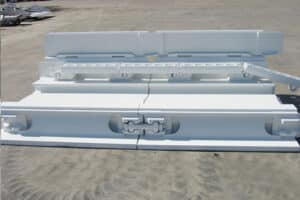
Despite the wartime conditions, Westfalia erects a vast new hall — 100 metres long, 35 metres wide — to bring trough production for Stauscheiben and PANZER® face conveyors fully in-house, on two parallel production lines.
A striking commitment to the site in a dark year.
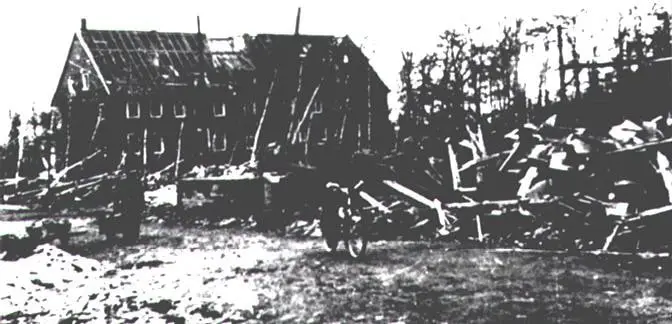
Bombing — and rebuild
On 22 November, Allied forces drop over 1,000 high-explosive and incendiary bombs over Wethmar. 24 high-explosive and more than 300 incendiary bombs strike the company grounds; a second raid on 29 November causes further heavy damage. The Westfalia residential settlement is also hit twice — the darkest day in the company's history. Already in 1945, the destroyed enamel works is rebuilt and reopened as Maschinenfabrik II for gear- and motor-production.
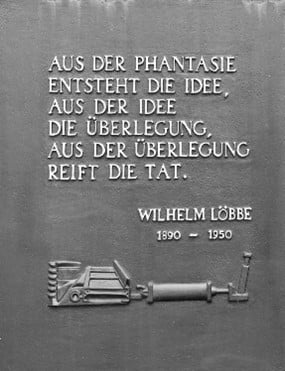
The designer Wilhelm Löbbe further developed the coal plane for the Westfalia ironworks, and the so-called "Löbbe plow" came into use worldwide.
Post-war production peak
Since their introduction, 1,000 PANZER® face conveyors with a total length of 125,000 m have been delivered. Annual stove production: 36,000 units (3,000 per month). 70 Löbbe-Hobel systems leave the works in a single year.
Westfalia takes part in the international mining exhibition in Liège.
The old Lippe weir is replaced
The old Lippe weir — decisive for the water power that fed the founding works in 1826 — is replaced by a modern barrage built by the water authority.
A quiet generational handover on the Lippe: 125 years after the first turn of the water wheel, the original source of power passes into modern water management.
Hydraulic walking roof support — a European first
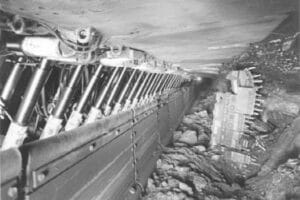
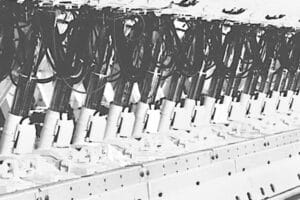
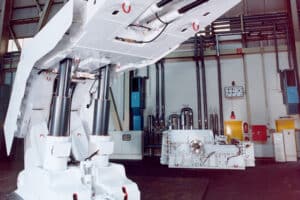
First deployment of Westfalia's hydraulic walking roof support (frame support) anywhere in Europe, at the Friedrich Heinrich colliery — a technological milestone that fundamentally transforms safety and productivity in underground coal mining.
Westfalia shield support
First deployment of the „Westfalia shield support“ in potash mining at Borken/Hesse — long before shield-support development properly begins in Hungary and Russia. Westfalia sets the international standard.
BSG Eisenhütte Westfalia — works football on „the Sandwüste“
The works' sports club (BSG) Eisenhütte Westfalia competes mainly in regional company-sport championships against other Ruhr-area works teams. Training takes place on the legendary sand pitch, locally known as „the Sandwüste“ (the sand desert) — a space of its own for the works community alongside the foundry, the machine hall and the men's choir.
150th Anniversary
Gewerkschaft Eisenhütte Westfalia celebrates its 150th anniversary in Lünen. The „Liedertafel Westfalia Wethmar“ records a commemorative vinyl album — the men's choir itself turns 100.
International Mining Exhibition in Düsseldorf with strong Westfalia presence.
The foundry closes — after 161 years
The foundry — the seed and heart of the works since the first cast in 1827 — is permanently closed. Workers either retire or move to other departments.

Gewerkschaft Eisenhütte Westfalia merges with Klöckner Becorit (Castrop-Rauxel) to form the company Westfalia Becorit Industrietechnik (WBI)

DBT is formed — and moves to Lünen
1995: The merger of MHW (Wuppertal), Halbach & Braun (Wuppertal) and Westfalia Becorit (Lünen) creates DBT Deutsche Bergbau-Technik GmbH. 1999: Headquarters move from Wuppertal to Lünen — making Lünen the headquarters of an internationally operating mining-technology group.
Ferrum Music Hall — the foundry becomes a dance palace
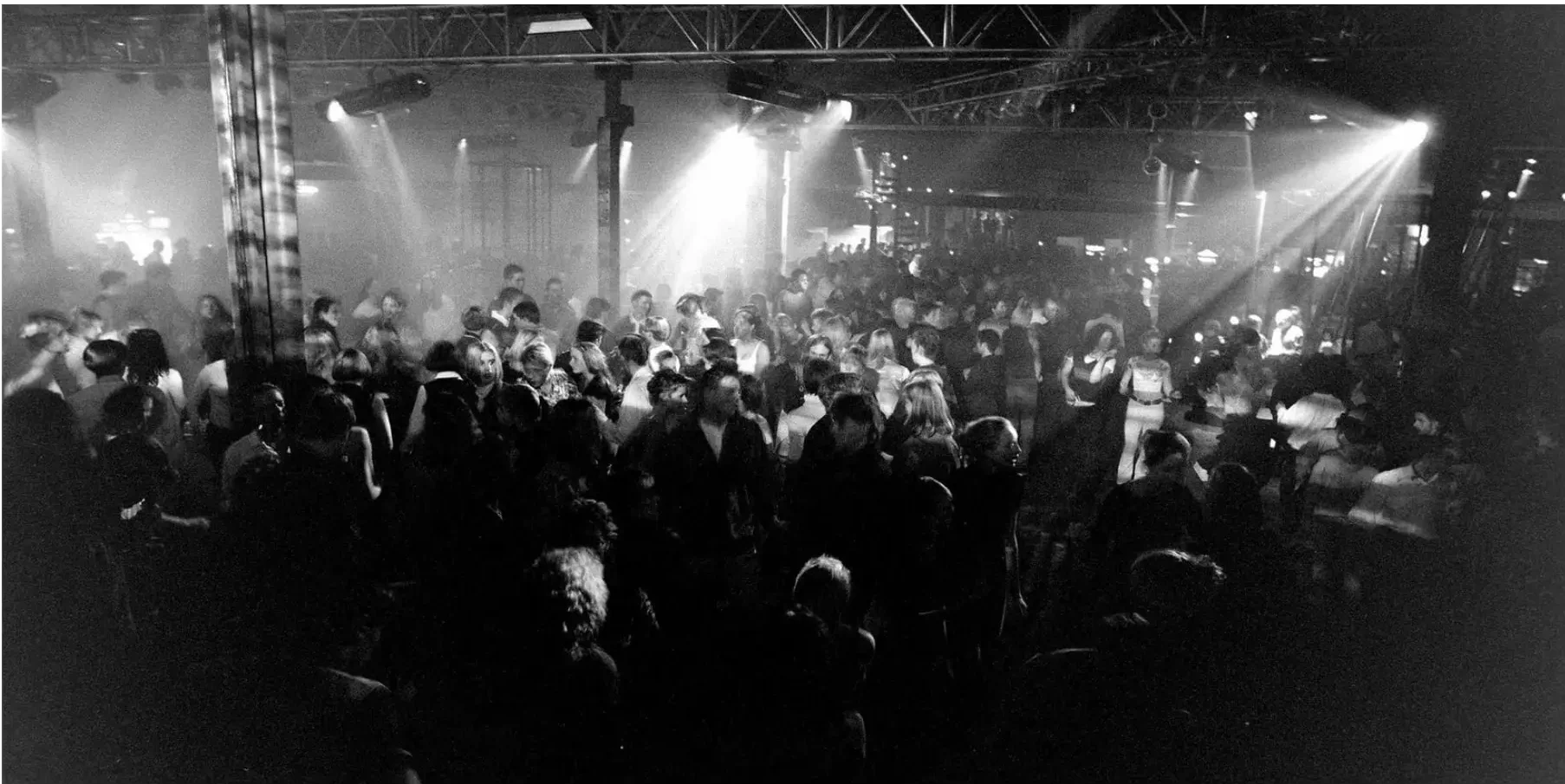
Against the backdrop of the old industrial site, Lünen's most famous discotheque opens its doors: the FERRUM Music Hall in the vacant buildings of the foundry, closed in 1988. An entire Lünen generation celebrates its youth there — until the foundry buildings (cleaning shop, enamel works, stove production) are demolished in the late 1990s, to the great sadness of the local youth. The brief interim use remains alive in Lünen's collective memory.
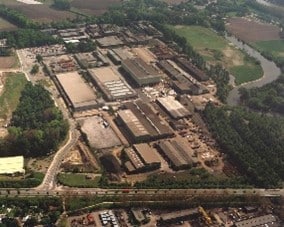
The headquarters of DBT Deutsche Bergbau-Technik GmbH is moved from Wuppertal to Lünen.
Circus Casselli — winter quarters on the works grounds
A curious chapter from the restructuring years: the Lünen-Brambauer-based family circus CIRCUS CASSELLI (the Kaselowsky family, today in its 7th generation) uses empty halls of DBT on the Westfalia site as winter quarters for its animals. Horses, ponies and mountain goats winter quietly among longwall conveyor drives and hydraulic props — another sign that the works grounds remained, even in its toughest years, a living place of encounter with the everyday life of Lünen. (Oral history from HBT employees, confirmed; a contemporary photograph is being sought.)

DBT Deutsche Bergbau-Technik GmbH takes over Long Airdox, Saartech and Seneca. Expansion of the product range to include products from the room & pillar mining sector. The company now trades under the name DBT GmbH.
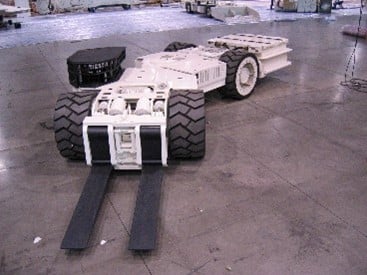
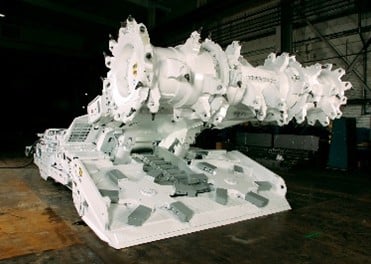
DBT takes over the Continuous Miner Division from Eimco.
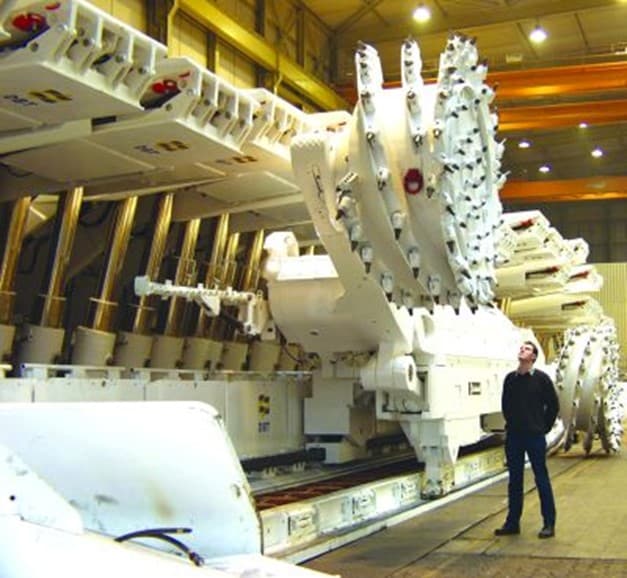
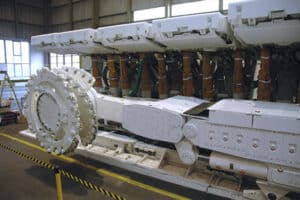
DBT has developed into one of the world's largest manufacturers of systems and equipment for underground coal mining.
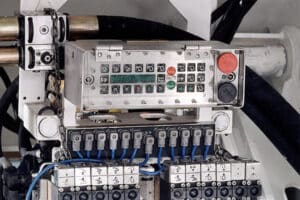
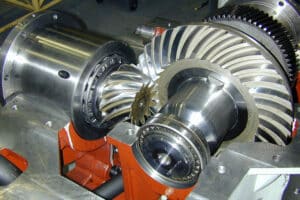
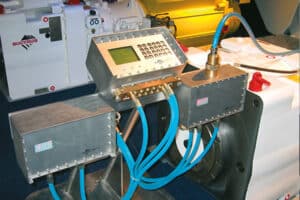
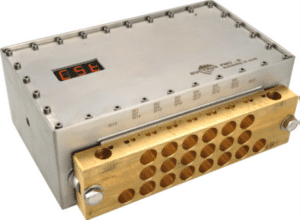
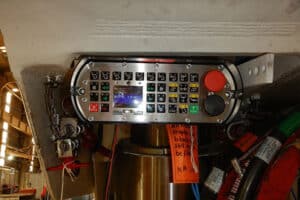
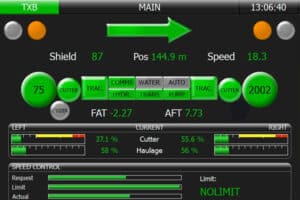
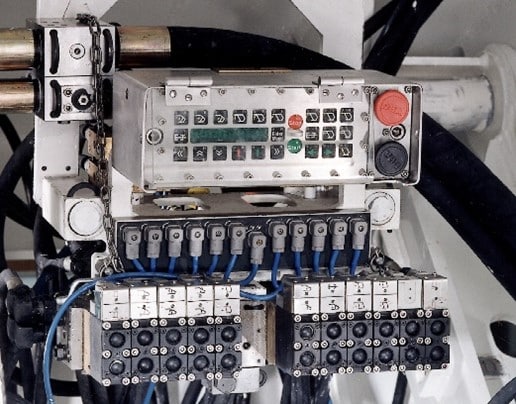
A focus of DBT's development work is the progressive automation of mining and process operations. The PM-4 electro-hydraulic control system and the electronically controlled CST gearbox (CST = Controlled Start Technology) have brought a considerable increase in efficiency in coal mining, in addition to safety-related advantages.
Bucyrus acquires DBT — €559 million
In May 2007, the American mining group Bucyrus International (Milwaukee, USA) acquires DBT Deutsche Bergbau-Technik for €559 million.
Lünen becomes part of an internationally operating group, listed on the New York Stock Exchange — the leap across the Atlantic. Earlier, in July 2001, DBT itself had acquired the US mining supplier Long-Airdox.

Caterpillar acquires — for US $8.6 billion
On November 15 2010, Caterpillar announces the acquisition of the Bucyrus Group for a staggering US $8.6 billion (approx. €8.4 billion) — completion follows in 2011. Lünen becomes part of the world's largest manufacturer of surface and underground mining equipment.
Caterpillar withdraws
In March 2020, Caterpillar announces the closure of the Lünen site, along with the plants in Dortmund-Dorstfeld, Wuppertal and Hamm.
Around 500 employees in Lünen are affected. On 31 December 2020, 50 % of positions are cut; on 31 December 2021, production ends. After 195 years, the story of the works on the Mühlengraben appears to be over.
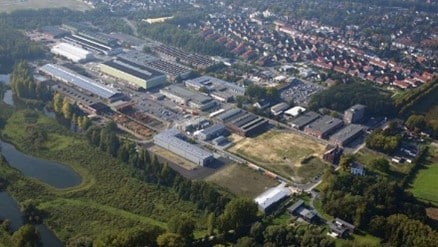
Day 1 — Hauhinco saves the site, CAT Global Mining is renamed to HBT
In February 2023, Hauhinco Holding GmbH from Sprockhövel acquires the entire longwall-mining business from Caterpillar Global Mining — the sites in Lünen, Wuppertal, Australia, USA, India and China.
The Lünen site now operates as HBT GmbH (Hauhinco Bergbautechnik) and starts with just 142 EMPLOYEES at the Westfalia Campus. In-house manufacturing resumes — closing the arc back to the founding idea of 1826: „make it ourselves“.

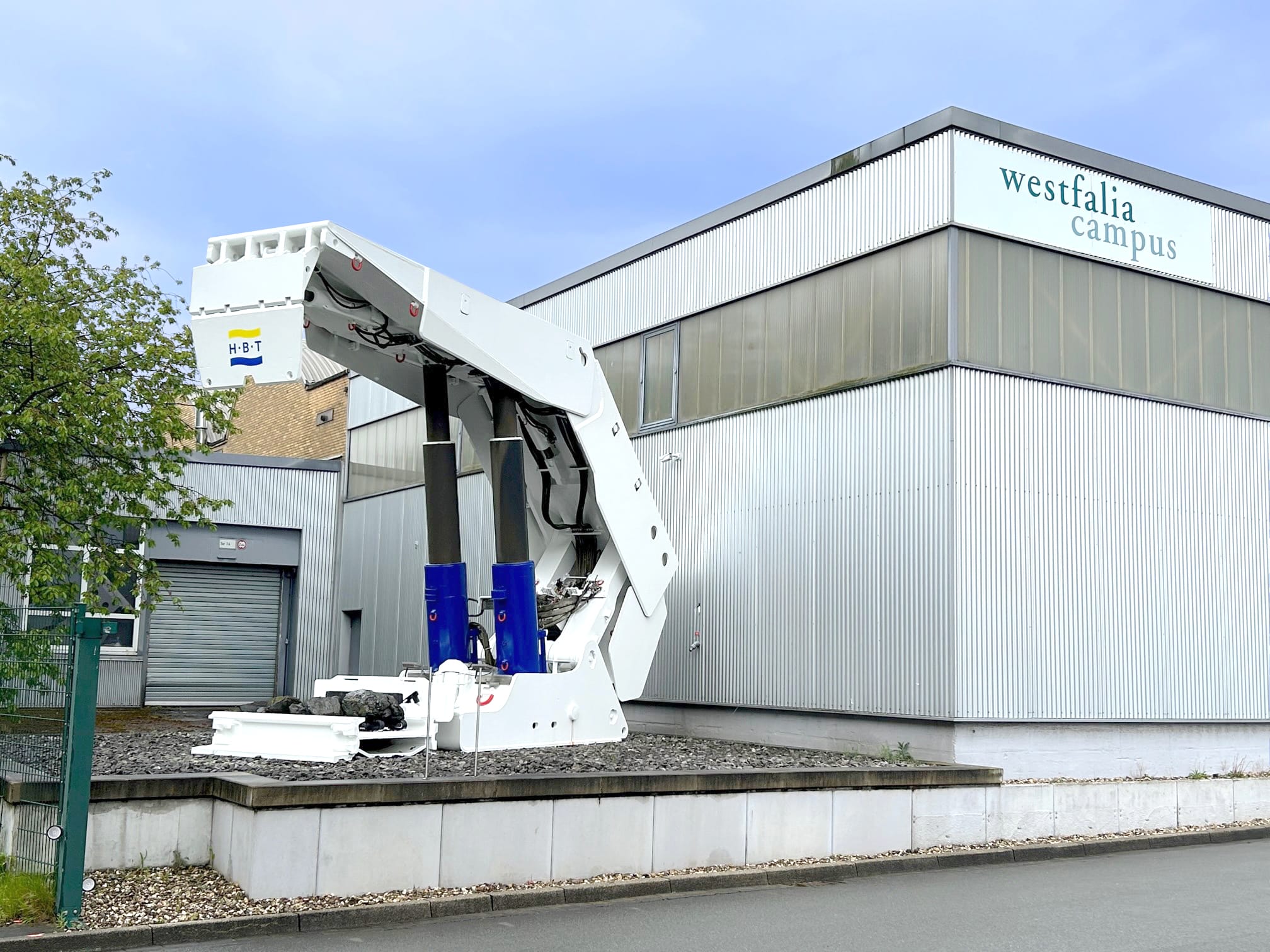
Renaming of the former Caterpillar Global Mining Europe GmbH site to Westfalia Campus. In addition to HBT GmbH, other industrial companies settle here.
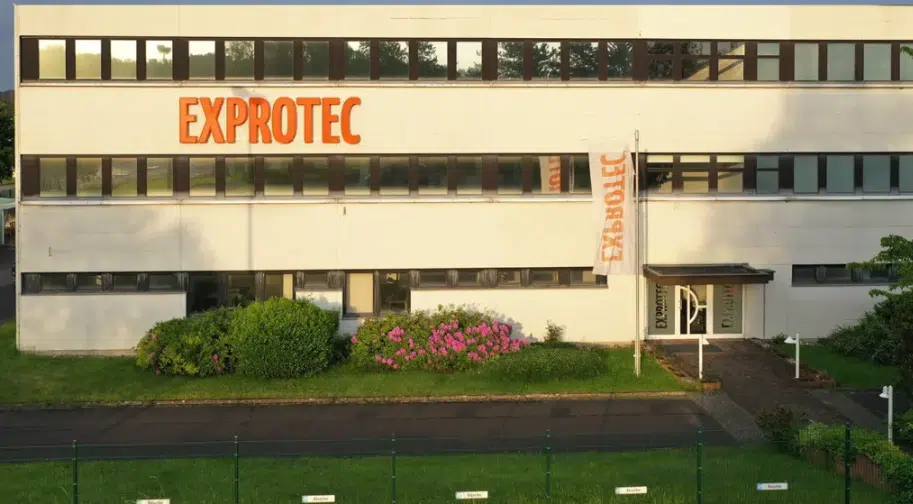
As a strategic investor, Hauhinco Holding GmbH is taking over the automation specialist EXPPROTEC GMBH (formerly Bartec) from Menden, North Rhine-Westphalia. The company, which focuses on electrical engineering for potentially explosive atmospheres, operates under the name HBT Automation GmbH and completes the longwall technology portfolio of HBT GmbH.
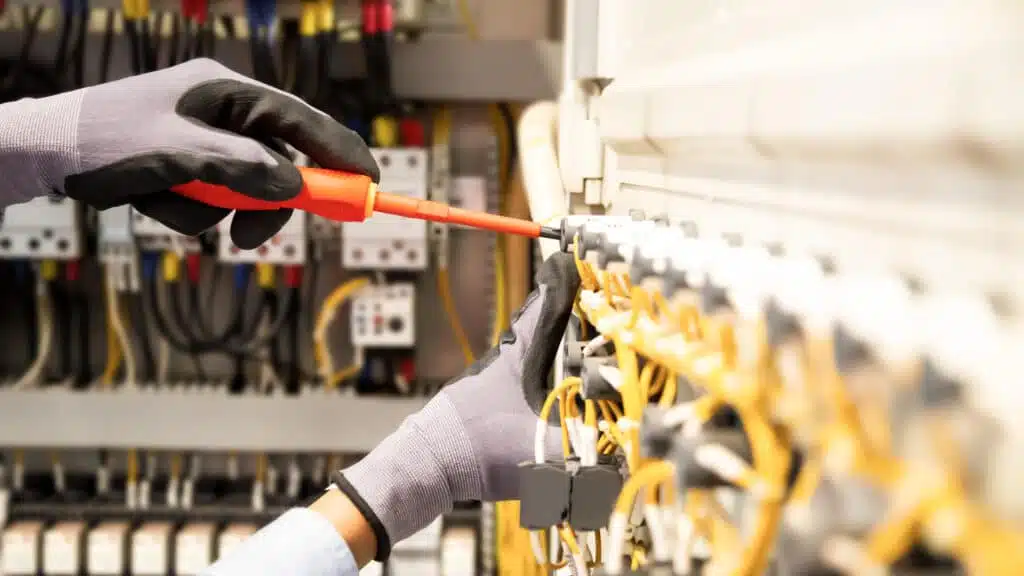
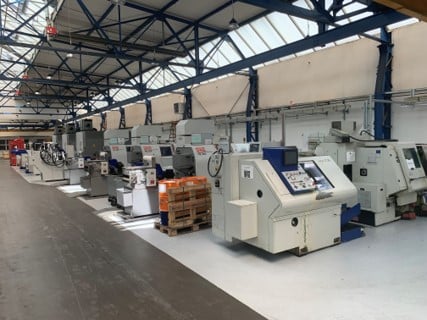
Relocation of HBT hydraulik production from Wuppertal to Sprockhövel, the site of Hauhinco Maschinenfabrik. Reconstruction of cubic production and the Flexible Manufacturing System (FMS) for the production of hydraulic valves for longwall mining (electrohydraulic controls, ram check valves, pressure relief valves, valves for various cylinders, check valves, components for gearboxes, automation and shearer loaders).
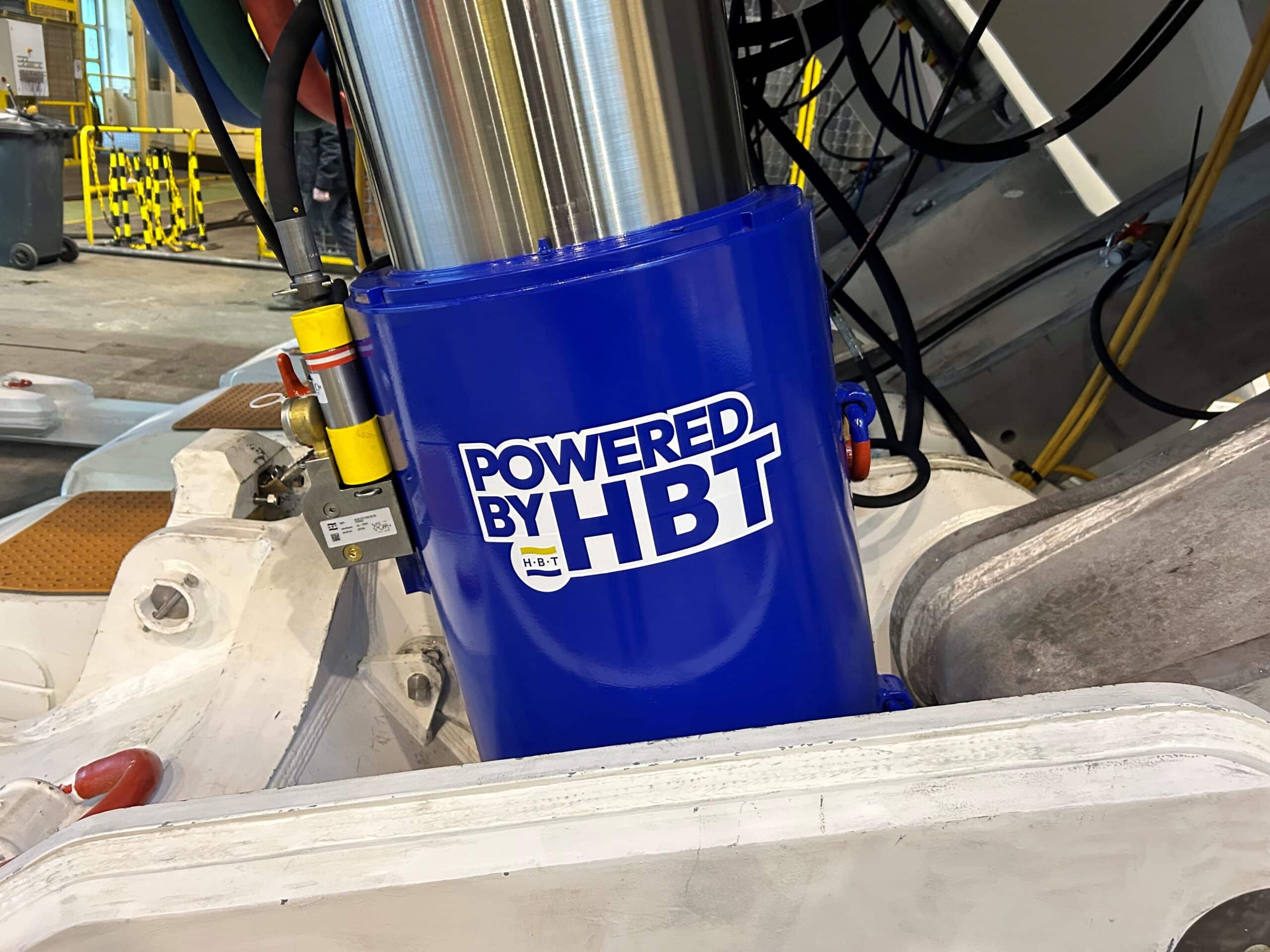
Reconstruction of in-house production at HBT in Lünen - with reactivation of long hydraulics (legs & cylinders) and heavy steel construction (machine frames, special line pans, cross frames), new machines for sprocket and planetary carrier production and a new welding shop with welding robots and circular welding machines. Construction of a system for laser cladding, for the coating of legs and cylinders to protect against wear and corrosion.

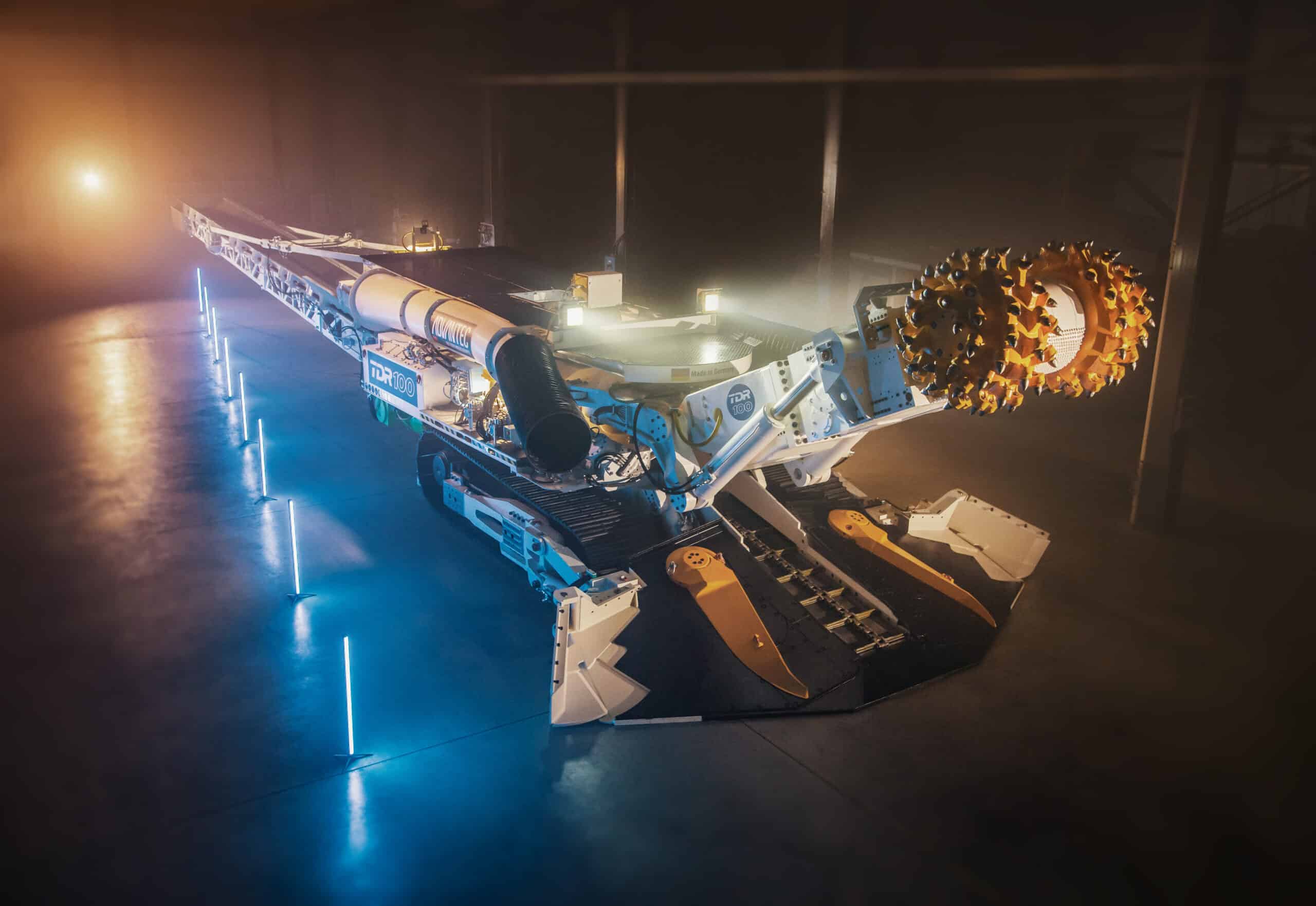
To close strategic gaps in the current product portfolio and to expand the product range, HBT GmbH has acquired 50% of the shares in ADVANTEC Tunnel & Mining Solution GmbH – a division of the ADVANTEC Group. The company is based in Werne, NRW and designs and manufactures roadheaders for the global mining and tunnel construction industry. The share purchase will take effect on June 1, 2023.
HBT Australia acquires the Australian mining equipment supplier Waratah Engineering in Argenton, NSW from the Questas Group. With the service center for the reconditioning of mining equipment, the HBT Group is also expanding its product range to include vehicles and machines for chamber and pillar construction.
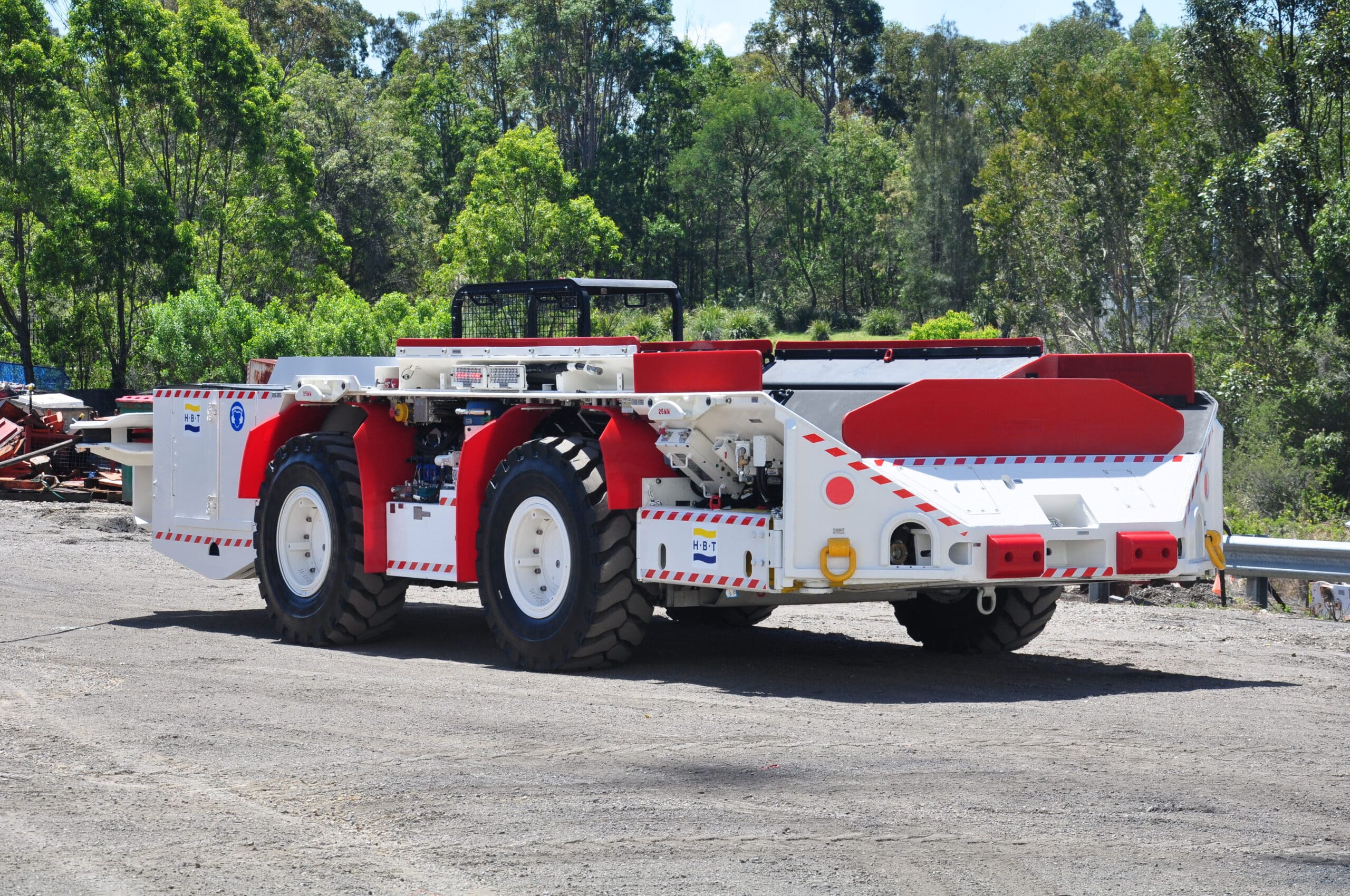
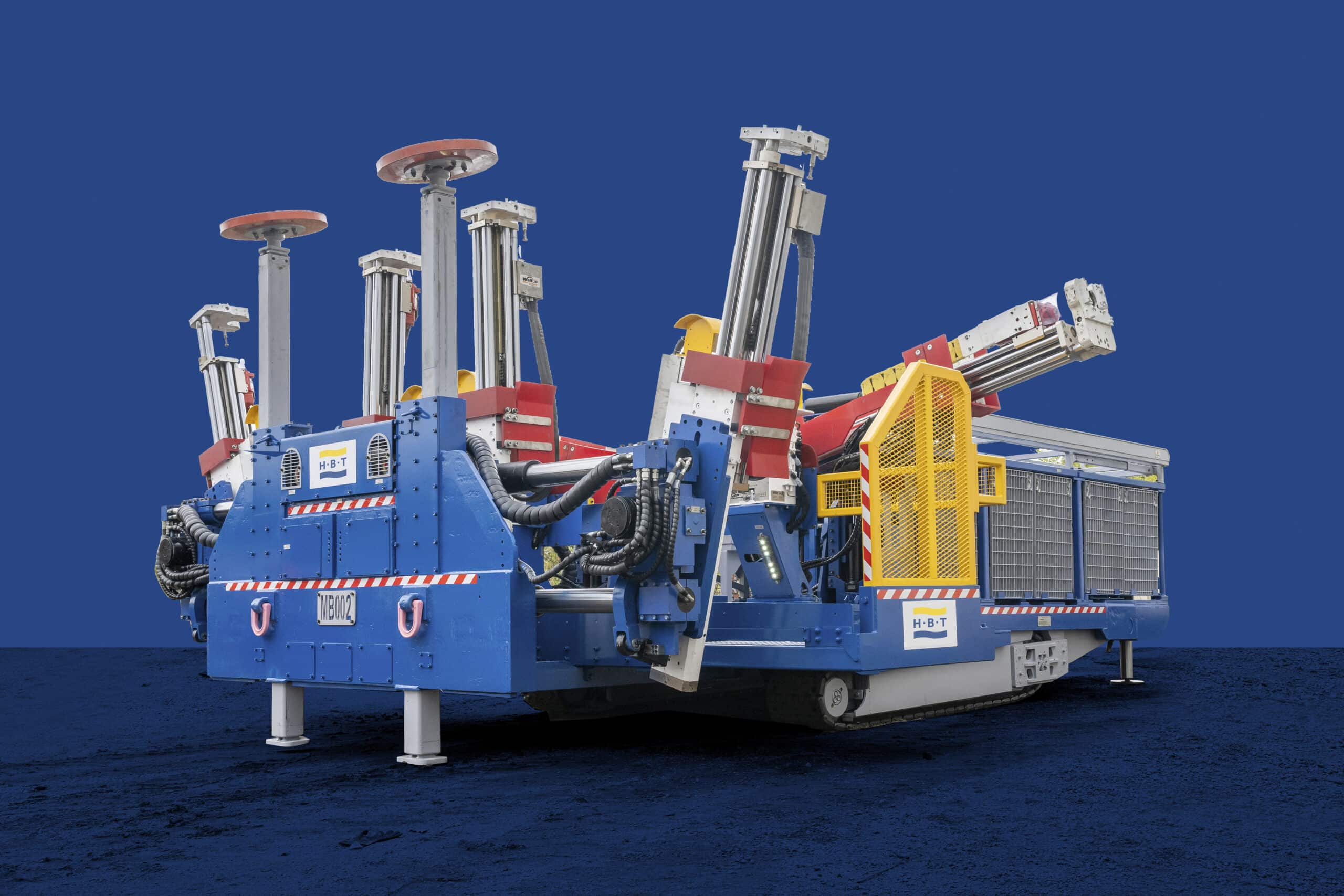
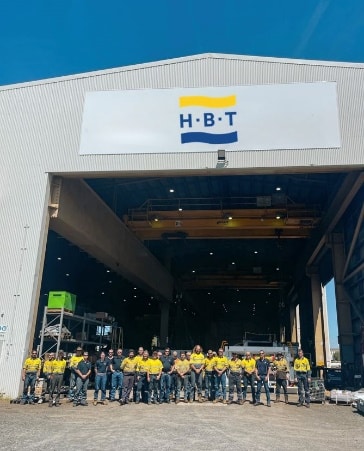
HBT Australia is opening a new service center in Queensland, Australia. HBT Services QLD Pty Ltd will provide mechanical, electrical, and structural maintenance services to its customers in Queensland. Key services include minor and major overhauls (including full AS3800 compliance), component refurbishment, re-engineering, spare parts supply, technical support, conveyor installations, outbye services, and project management.
With effect from March 1, 2024, Hauhinco Holding GmbH – parent company of HBT GmbH – has acquired the Australian mining supplier Pempek Systems Pty.
Pempek Systems is an Australian mining components supplier based in Castle Hill near Sydney. Pempek is a leading global supplier of equipment control, telemetry, hydraulic control, and roof bolting solutions for mining applications. The Pempek product range is an ideal complement to the HBT Group’s longwall systems, room & pillar mining vehicles and roadheaders.
HBT Australia and leading energy sector solutions company TotalEnergies Marketing Australia (a subsidiary of TotalEnergies SE) agree to partner on mining and tunneling lubricants, including HFA fluid for longwall systems.
Hauhinco Holding GmbH - parent company of HBT GmbH in Lünen - takes over Breuer Motoren GmbH & Co. KG in Bochum. HBT now offers complete drive solutions for longwall systems - including electric motors and frequency inverters - from a single source.

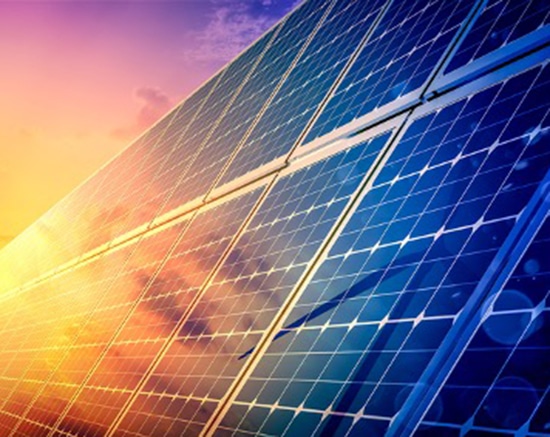
HBT is starting the installation of approx. 40,000 square meters of photovoltaic panels for a self-sufficient power supply for the companies on the Westfalia Campus site. In the first phase, a total output of approx. 2.5 megawatts is to be achieved. In a second phase, the output is to be increased to 3.0 megawatts.
Apprentice class of 2024 — the works-school tradition continues
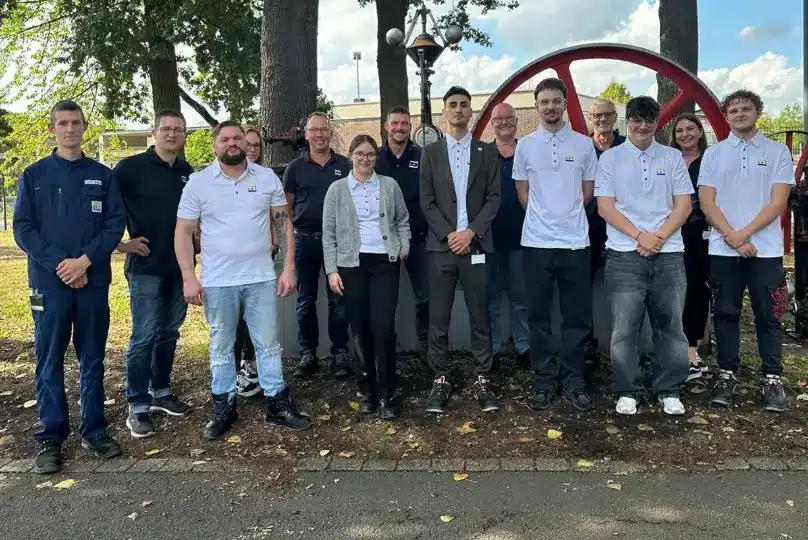
In September 2024, five new apprentices start their training in Lünen; in 2025 six more follow — in the trades industrial clerk, industrial mechanic, construction mechanic, machining mechanic, mechatronics technician, electronics technician for industrial engineering and (NEW since 2025) IT specialist for system integration. The apprenticeship tradition begun in 1907 with Sunday classes and formalised in 1917 as the works' vocational school lives on — this time in cooperation with Wilo SE in Dortmund and three regional vocational colleges.
Westfalia Campus today — 866 jobs, € 430 M revenue
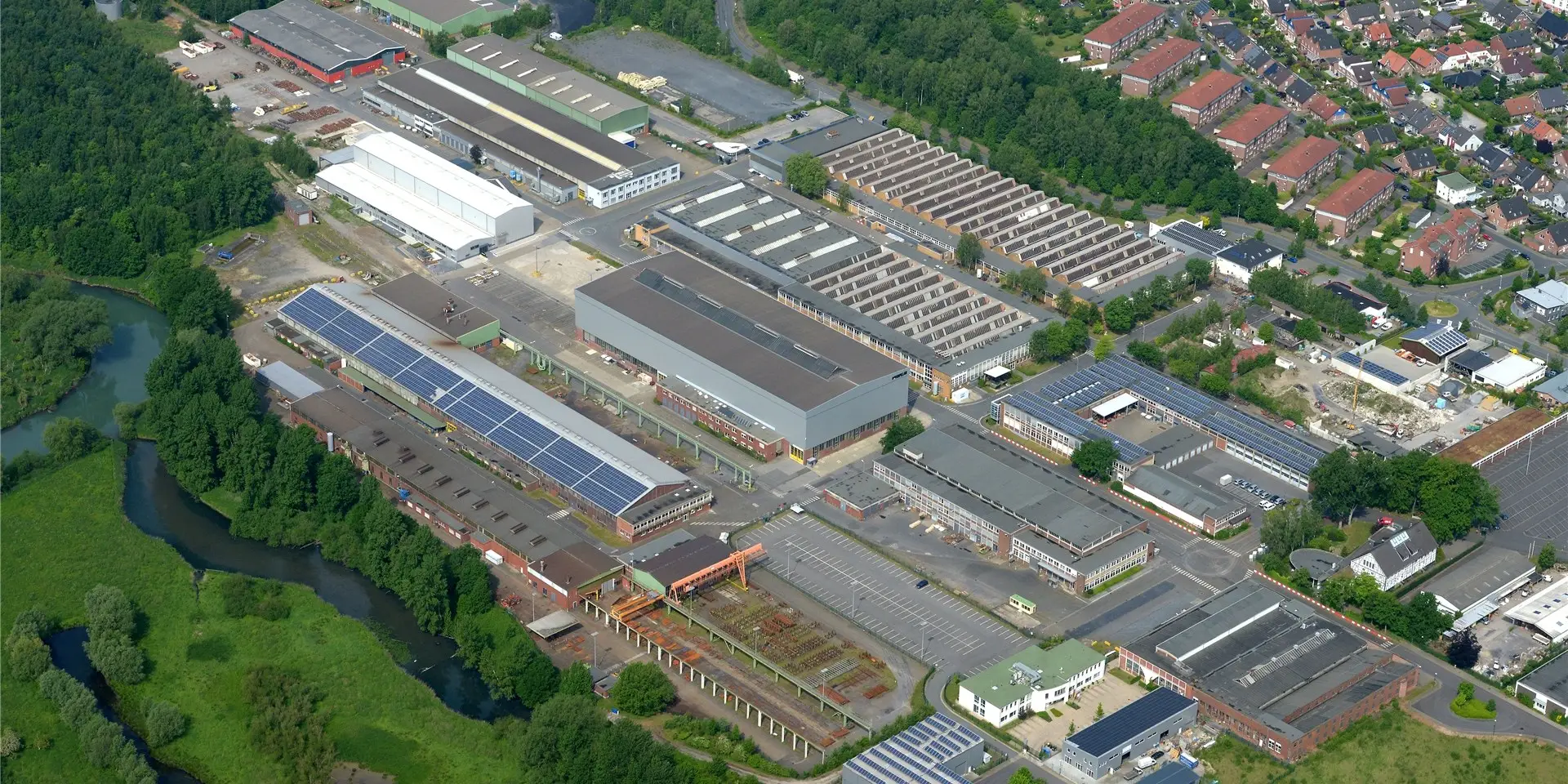
Q1 2025 — the WESTFALIA CAMPUS in Lünen is once again one of the largest industrial and technology sites in the eastern Ruhr region: 220,000 m² of total area, 90,000 m² under roof. 866 JOBS on the campus, of which 320 at HBT and 350 with a growing circle of tenants and partners: Thyssenkrupp Uhde, Mercedes-Benz, SIBA, VAHLE, Siempelkamp, Wolters, MyTop, and the Breuer Motoren plant (back in Lünen since February 2025).
A 5 MW photovoltaic system on 40,000 m² of roof area powers the campus (Phase 1 = 2 MW complete, Phase 2 = 3 MW in 2026).
HBT Group worldwide — 1,500 employees, +240 % growth
By spring 2025, the HBT Group worldwide employs around 1,500 PEOPLE (more than 400 of them engineers), 600 in Germany (NRW).
REVENUE 2024:
€ 330 million; forecast 2025: € 430 million — equivalent to +240 % growth in the two years since HBT Day 1. GLOBAL INVESTMENT: € 100 million, of which € 40 million in Germany.
MORE THAN 1,000 SUPPLIERS AND PARTNERS worldwide, with regional preference for the Ruhr area.
REVENUE BREAKDOWN:
Australia 34 % · USA 30 % · China 15 % · Turkey 8 % · EU 8 % · India 3 % · Germany and Saudi-Arabia 1 % each. GLOBAL
LONGWALL FLEET IN OPERATION:
5,174 roof supports, 3,562 electro-hydraulic controllers and 199 gearboxes — the wave of underground engineering technology that Lünen engineers results in one of the globally highest installed basis of the mining industry.
200 Years of Eisenhütte Westfalia
Bicentennial — celebrated in Lünen in June 2026. Two centuries of inventive spirit, craftsmanship and community. From a water mill on the Lippe to a global mining-technology site. The City of Lünen honours the anniversary with the exhibition „200 Years of Innovation from Lünen“ at the Museum der Stadt Lünen (Villa Urbahn) from 3 May to 29 October 2026. The „old canteen“, the only surviving original building, has been carefully restored and now serves as an elegant event venue.